
WPC Fencing Sydney: The Smart Alternative to Timber Fencing
Modern Composite Fencing Designed for Australian Conditions
When choosing a new fence for your property, durability, appearance and maintenance are often the most important considerations. While traditional timber fencing has been a popular choice for decades, many Sydney homeowners are now turning to WPC fencing (Wood Plastic Composite fencing) as a superior long-term solution.
At ComfYard, we specialise in modern fencing solutions that combine style, privacy and durability. Our co-extrusion WPC fencing systems are designed specifically for Australian conditions, providing the natural appearance of timber without the ongoing maintenance and common problems associated with wood.
Whether you are building a new home, upgrading an existing fence, or creating a contemporary outdoor living space, WPC fencing offers a practical and attractive alternative to traditional materials.
What Is WPC Fencing?
WPC stands for Wood Plastic Composite — an innovative material made from a combination of recycled wood fibres and high-performance polymers.
The result is a fencing material that looks like natural timber but performs far better in outdoor environments.
Unlike traditional timber fencing, WPC does not require regular painting, staining, sealing or repairs due to weather exposure. It is engineered to withstand moisture, UV radiation, termites and everyday wear while maintaining its appearance for years.
Modern WPC fencing is available in a variety of colours, finishes and designs, making it suitable for contemporary, classic and architectural homes alike.
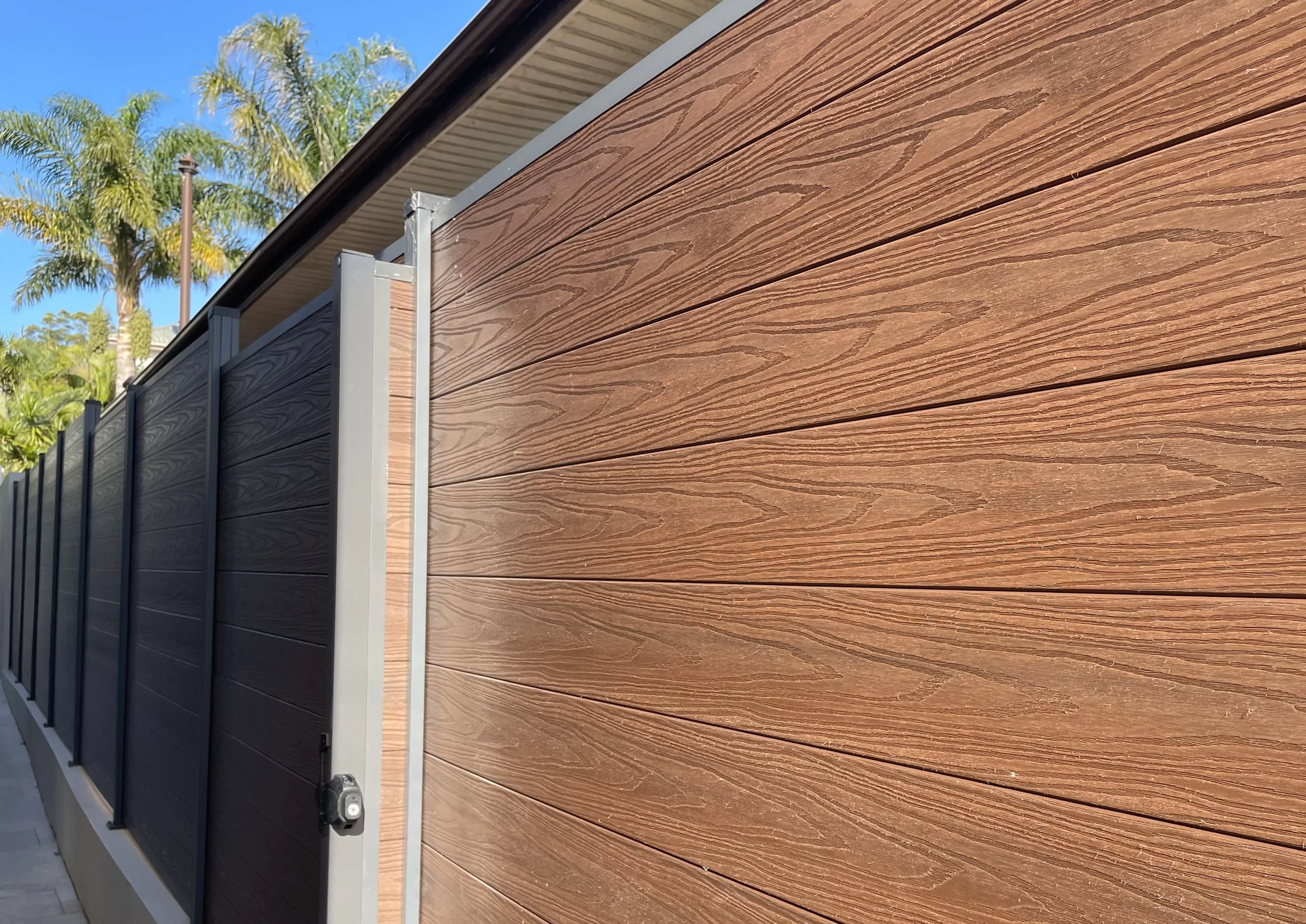
What Is Co-Extrusion WPC?
Not all WPC fencing products are created equal.
First-generation WPC products were manufactured using a standard extrusion process, where the entire board consisted of a single composite material.
The latest generation uses co-extrusion technology, which adds a durable protective outer layer around the composite core.
Think of it as advanced armour for the fence panel.
This protective layer significantly improves:
UV resistance
Colour stability
Scratch resistance
Moisture protection
Stain resistance
Surface durability
Overall lifespan
As a result, co-extrusion WPC fencing represents the highest standard currently available in composite fencing technology.
WPC Fencing vs Timber Fencing
Many homeowners considering a new fence ask the same question: Is WPC fencing better than timber fencing?
While timber remains a popular choice, WPC offers several significant advantages.
No Rot or Decay
Timber naturally absorbs moisture.
Over time, this can lead to:
Rot
Fungal growth
Softening
Structural deterioration
WPC fencing is highly resistant to moisture-related damage.
Termite Resistant
Termites are a major concern throughout many parts of Australia.
Unlike traditional timber, WPC fencing does not provide a food source for termites, reducing the risk of costly damage.
No Painting or Staining
Timber fencing requires regular maintenance to maintain its appearance and extend its lifespan.
This often includes:
Painting
Staining
Sealing
Sanding
Repairs
WPC fencing eliminates these ongoing maintenance requirements.
No Warping or Splitting
Changes in temperature and moisture can cause timber boards to:
Warp
Twist
Crack
Split
Composite fencing remains far more dimensionally stable, helping maintain a clean and uniform appearance.
Consistent Appearance
Timber changes colour naturally as it ages.
Some homeowners appreciate this weathered look, while others prefer a fence that maintains its original appearance.
Co-extrusion WPC retains its colour and finish far more consistently over time.
Lower Lifetime Cost
Although timber fencing may initially appear less expensive, ongoing maintenance and repairs often increase the total ownership cost.
When maintenance expenses are considered, WPC fencing frequently provides better long-term value.